
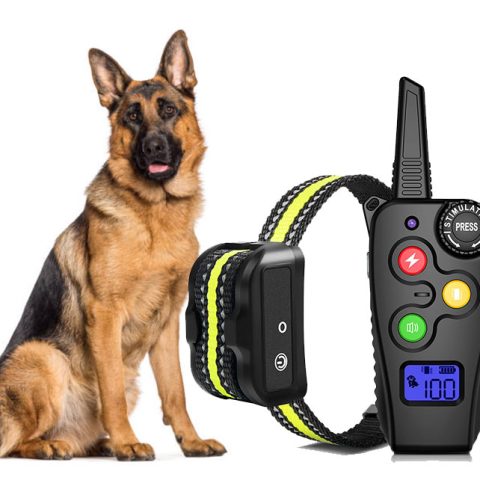
Dogs are a source of happiness and love for any household. Their presence in the family brings joy to everyone. Most puppies eat, sleep, play and gently chew on their toys. All they need is love and proper care.
However, as they grow into adults, they start to develop a mind of their own and do unwanted activities which need to be trained to behave appropriately. So, when is a dog old enough for a shock collar to train a dog?
Appropriate age to use a shock collar for dogs
Dogs are energetic and active. When you take them for walks to public places, they might feel distracted by any movement they see around and start chasing them down, or any unpleasant behavior may leave you wondering if you can start using dog collars and when they can be used.
Training your puppy as soon as you adopt it is a piece of common knowledge when you bring a puppy at home.
Basic manners such as housebreaking and learning to avoid play biting, nuisance barking and whining, and jumping up should begin at a young age.
Dogs differ in their size, some are large, and some are small breeds. To begin using a shock collar to train the puppy, several considerations should be made.
Some puppies are ready to wear e-collars at around the age of 14-15 weeks, and others should wait until the prescribed 6 months of age.
The shock collar can be used for training much earlier for large puppies such as German Shepherds, which are large enough to fit the shock collar properly and have a boisterous, outgoing personality.
On the other hand, quiet, reserved, or more withdrawn puppies should wait until at least 6 months.
When using shock collars, you need to pay extra attention to them to explore the world and adventures instead of focusing on punishing them too soon and causing potential hesitancy.
Facts about using a Shock collar
When using a shock collar, gather detailed information and knowledge of the tool and put in the needed training time. The decision about using shock collar training should depend more on your dog’s temperament and historical experiences than the age. To safely use the shock collars requires patience and compassion to train the puppies.
The shock collar should not punish your puppy for nuisance behaviors and should be used to fix the behavior. Take time to adjust to the collar and deal with it with patience.
The owner and the puppy should be ready for the collar and proceed with the shock collar conditioning process. Practice several times and train your puppy because e-collar conditioning teaches your pet how to respond and take control of the sensation.
The precise information on managing the shock collar with your puppy could also strengthen the bond between you and your pup and enjoy the time together. Dogs have a short attention span. Pay attention to your dog’s limited attention span. Keep the sessions short, and as you practice together, you will build your dog’s mental endurance.
To encourage them while training, reward them with treats and praises when they are doing right. Giving treats whenever your dog is behaving positively will help in the training process. Everything will function smoothly once your dog understands how to respond and do as you direct.
The Best Shock Collars for Puppy Training
Shock collars deliver a little shock and vibration whenever your puppy starts barking. There are few shock collars available in the markets that are usable with young puppies around 8-10 weeks. There are shock collars that can be manually triggered to stop puppies from behaving undesired behaviors such as running away, chewing on your furniture and anything that seems undesirable.
Whenever your puppy feels a disagreeable sensation, that will make him stop undesirable behavior, and with consistent training, your puppy will associate the shock with the undesired behavior and try to avoid it eventually. A puppy shock is an ideal solution for the puppies that get out of your control and constantly whine or bark continuously, disturbing your neighbors.
Some brands of shock collars are specifically designed for puppies.
- AHJDLBark Control Collar
- Pet Yeah Dog Bark Collar
- Flitter Shock Collar for dogs
- NPS No Shock Bark Collar
- Dog Bark Collar By TOTIE
Steps to effectively and safely nurture positive behavior using a shock collar
When introducing a puppy to the shock collar, it is a crucial step to begin the training properly. An improper introduction of a puppy to the training collar can permanently hamper his ability to respond to training.
Determine the correct level of stimulation
Fit the collar on your pup’s neck and allow the fitting snug to take positive contact and take out your dog on a leash into an open area. Start with the lowest stimulation level. If the dog shows no stimulation, adjust to the next level until you find the appropriate level.
Reduce the stimulation if your dog responds to it by crying out or whimpering. It means that it is too high to bear for your puppy.
Install the recall command
Allow the dog to wander around with the leash and training collar. Give the recall command to come to you, activate the shock collar in the continuous stimulation mode while gently coaxing him with the leash.
It is simply teaching him to avoid undesirable behavior, and when your pup begins to come to you, turn off the stimulation and reward him with treats and praises.
Once the dog responds positively, move your training session to the enclosed space because they respond differently in new environments.
Using a shock collar for negative reinforcement
Even while using it to stop unpleasant behavior, the amount of stimulation should be just enough to stop the behavior. Use a little higher stimulation when showing undesirable behavior such as pulling the leash away, whining, barking etc., and keep in mind to adjust the punishment to fit the crime.
Side Effects of Using a Shock Collar
- Shock Collars can be harmful to your dog, which can cause pain and increase aggression, and fear will be instilled in your dog.
- The electrostatic shock can cause psychological distress and phobias or high level of stress and can also result in unhealthy increases in heart rate and painful burns on the skin.
- It can also damage your relationship with your dog based on love and trust.
- Dogs have a different way of expressing themselves, like jumping on you and wagging their tale, etc. If you associate punishment, that will impact their way of expressing themselves.
Conclusion
Puppies are fragile, and they continuously learn from their environments. Interact with them, and they will receive information in their way.
It would be best to be patient with them as they take time to process everything that happens around them and the environment. Adding unnecessary stress and punishment will not help in their learning.
But if there is a need that your pup is behaving in a certain way that needs to use a shock collar, then think about a shock collar or instead begin with positive reinforcements.