
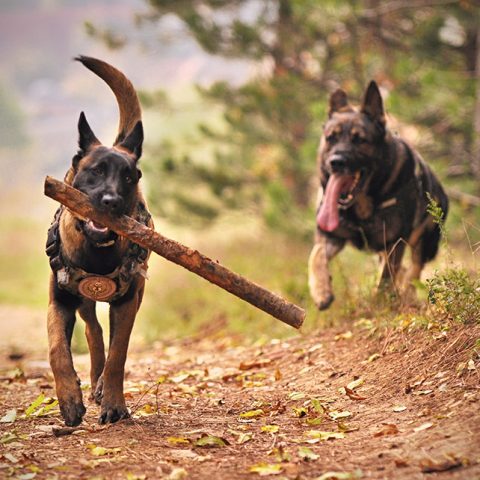
German Shepherds are affectionate dogs, and they get used to company. However, do German Shepherds have separation anxiety?
Have you noticed – when you are getting ready to go out, suddenly your dog starts barking and behaving aggressively and by the time you reach home, you would find your couch ruined and shoes shredded and what not.
Have you ever considered thinking about why your dog is showing such behavior whenever you leave him and go out? Is it a sign of separation anxiety?
Do German Shepherds have separation anxiety?
German Shepherds do show aggressive behavior and become restless. This is due to separation anxiety. German Shepherds have separation anxiety. So, it is common in dogs, especially in German Shepherds.
German shepherds are very affectionate and loyal dogs. They like to spend time with their owners; however, they hate when left alone. It brings anxiety and stress to them.
German Shepherds should be taken care of at an early stage so that later your dog does not harm themselves.
Why does German Shepherd get separation anxiety?
There is one member in the family to whom the dog will be attached, and being parted from that person might stress the dog and trigger anxiety.
There is no sole reason why dogs tend to develop separation anxiety. However, most of the time, this kind of behavior is seen among the dogs who have been adopted from shelters, and it is said that the loss of a group or person leads to separation anxiety in them.
Other dramatic events can also trigger separation anxiety in them. Some situations mentioned below are associated with separation anxiety in dogs.
- Change of guardian or family can trigger separation anxiety. Being abounded, given to a new owner or a shelter can trigger separation anxiety.
- Change in schedule, in terms of how long the dog has been kept alone, can also trigger separation anxiety.
- Change in residence or moving to a new place can cause anxiety in dogs.
- Absence of a family member or death of a family member can cause separation anxiety in German Shepherds.
- Many medications can cause hormonal changes in dogs leading them to have anxiety issues.
- Other behavioral problems can be diagnosed as separation anxiety.
- If the urine training is not done properly, the dog might not be able to urinate in the absence of its owner and fear being separated from the owner.
- Boredom can lead to anxiety. Dogs need mental stimulation and are anxious when the owner is not around for too long.
Read: What are the most common health issues in German Shepherds
Symptoms of separation anxiety in German Shepherds
Following are some common symptoms that can be associated with separation anxiety.
- Urinating and defecting – Some dogs urinate or defecate when left alone.
- Barking and howling – Dogs with separation anxiety will bark and howl a lot when separated from the caregiver. This can be persistent whenever he is left alone.
- Chewing, digging and destruction – Some dogs having separation anxiety chew on objects, doors, frames, dig at the door and destroy household objects. This behavior can lead to self-harm and injury.
- Escaping – Dogs try to escape home when alone. This is only seen in dogs with separation anxiety.
- Pacing – Dogs with separation anxiety will move in circles or back and forth when left alone.
- Coprophagia – You will notice that a dog defecates and eats all when left alone but doesn’t perform that behavior when the owner is present.
- Crying – Whenever the owner tries to leave the house, the dog will start crying.
How to deal with separation anxiety in German Shepherds?
Mild cases of separation anxiety can be treated at home with proper care and guidance.
- Counter conditioning – It is a treatment process that changes an animal’s fearful reaction to a pleasant one. It focuses on developing an association between being alone and good things.
- Do not overreact – When you leave home and your dog starts behaving aggressively, do not panic and overreact; don’t be intimidated. Try to ignore your dog when he is going through separation anxiety and make it seem like it wasn’t a big deal.
- Train your dog to be alone – Start training your dog at an early age to be alone so that he doesn’t develop separation anxiety.
- Try some activities with your dog – Make your dog do some physical activity so that he gets tired and falls asleep, and you can leave home when they are asleep.
Conclusion
Separation anxiety mostly appears in dogs before 2 years of age, so the caregiver needs to train the dog early enough not to develop separation anxiety.
After middle age, the dogs will stop having separation anxiety.
Separation anxiety can be cured, especially when the root cause of the problem is discovered and taken care of. However, curing separation anxiety in dogs depends on the owner.