
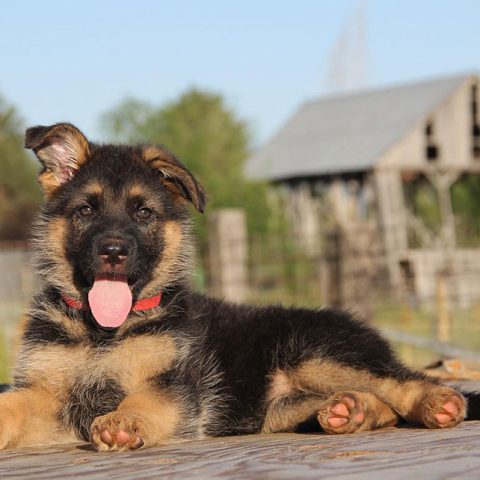
Everyone desires a well-trained dog to pet, isn’t it? But this calls for a lot of hard work and patience on the owner’s part as well. The owner should be very calm and disciplined while training their pets to behave well as everything does not go as planned every time.
There may be times when your pet makes mistakes and take a lot of time to inculcate new habits, but patience and determination are the keys.
Likewise, a German Shepherd also needs training from its puppy stage itself. Like a human baby, teaching puppy German Shepherd habits becomes easy as compared to the adult stage.
German Shepherds are normally extremely physically active and need rigorous physical exercise regularly otherwise, the stored energy can have a detrimental effect on the dog. Set a 8 week timeline to learn how to train a German Shepherd puppy.
German Shepherds are courageous, energetic, intelligent and confident. They may take some time to make friends but are mostly very loyal to their owners as well as to their work. But as stated before, to acquire all the good traits from a German Shepherd, proper training is very important from the puppy stage. Keep reading the blog to know all the details about training your puppy German Shepherd.
How to train a German Shepherd Puppy?
In order train a German Shepherd puppy, you must first be clear about why it is important to train a puppy, basic requirements for training and your goals to train the puppy. If you have not set your goals, you might have much more expectancy from your GSD than you should. So, let’s dive deep into every nook and corner of training a GSD puppy.
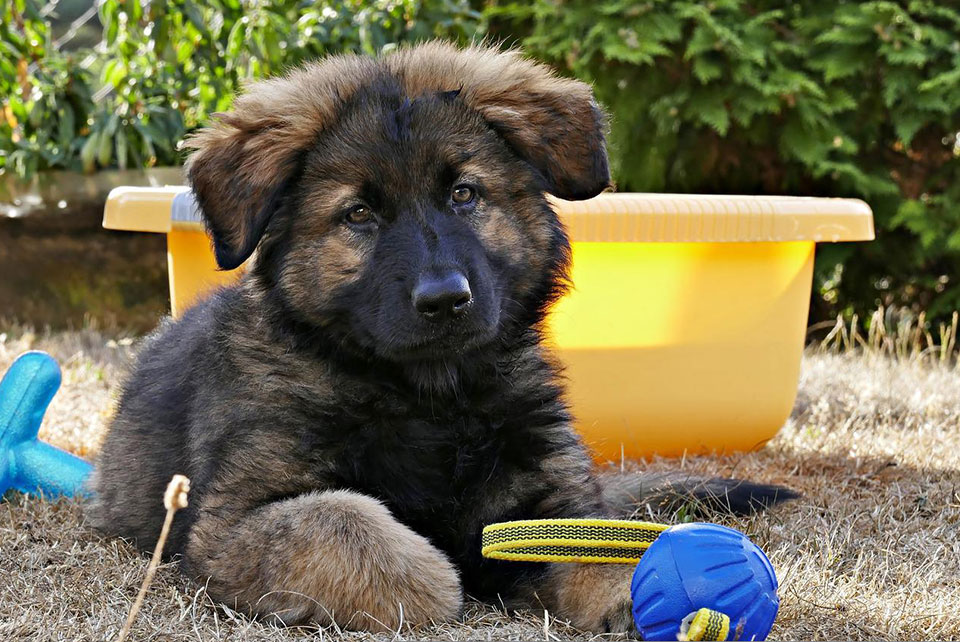
Why is it necessary to train German Shepherd puppies?
To make your dog well-behaved
German Shepherds are very loyal to their owners and can even endanger their lives to save their masters. But if not trained, your GSD will not behave as expected. He can become very stubborn and will never listen to your instructions. They may irritate people by constantly jumping on them or chewing up things that are not meant to be, peeing or excreting inside the house, barking constantly, etc.
Read: Are German Shepherd good guard dogs
To make your dog feel connected with you
Not only training will make your dog a well-behaved dog, but also will help him to bond with you better. Training will establish a deep relationship between you and your dog that will last forever. The reason behind this is that while training you get to spend a major amount of time with him, doing activities together. This way, your dog can feel connected with you in a positive way.
To ensure the safety of your dog
Training is meant to teach manners to a German Shepherd but also save his life if he is in any danger. If he is well trained to obey and respond to the instructions of his owner, he can be saved from a life-threatening situation. On the contrary, if the dog fails to understand and respond properly, no one can save its life from danger.
Requirements for Training German Shepherd Puppy
There are certain things that the owner should have in handy while training his German Shepherd puppy. Some of the necessary equipment are mentioned below:
ID Tags and collar
In some countries, it is mandatory for dogs and puppies to wear ID cards when outdoors. Hence, if you are taking your puppy outdoor for training, and you happen to live in one of those countries, do not forget to make him wear an ID card to prevent yourself from falling into any trouble.
Harness
Harness is better than collars to get hold of a wriggly dog. If your dog tends to run away at the time of training, with the help of the harness you can easily pull him and instruct accordingly. While on the other hand, collars can be uncomfortable for your dog at times.
Read: How to train a German Shepherd with a shock collar
Puller Training rings
Puller training rings come in a set of two rings which can be used to train your German Shepherd puppy in various ways. It can be used for strength training by playing tug-of-war with your dog, jumping, fetching, etc. You can teach your dog to run by throwing one of the rings and allowing him to retrieve it. Repeat the process with the ring also. This will teach your dog to retrieve equipment as well as improve speed.
Dog Training Tunnel
Dog training tunnels are commonly made of plastic and can be easily folded and stored when not in use. This helps in the agility training of your puppy. Being agile is one of the most important traits of a German Shepherd. Most of the tunnels come with a collapsible wireframe and can be expanded to 18 feet.
Initially, start training your dog in a straight tunnel and then eventually make it into a curved shape to increase the difficulty level. You can train your puppy to pass through the tunnel by placing some toys inside it and feeding him treats when he appears at the other end. This will knot make the dog anxious. This also helps improve agility.
Dog Whistle
Dogs do not speak or understand the human language! That’s quite obvious, isn’t it! To make him understand your command, you will have to find ways to understand your orders. German Shepherds have a hearing range from 45,000 Hz to 65,000 Hz. With the help of a dog whistle, which has a sound range of 35,000Hz, can train the dog to stop doing certain activities.
You can use voice commands along with the whistle to command your dog. Slowly, your dog will start to respond to your commands.
Flying Disc
Another piece of equipment that trains your German Shepherd puppy to retrieve. This has an advantage over tennis balls and sticks because of the longer flying time. You can throw the disc and command your dog to retrieve it. This helps to develop his aerial skills as well finding hidden objects. Not only this, but you can also use a flying disc in water since it can easily float. Your puppy, in this way, will have good physical exercise as well.
When can you start training your German Shepherd puppy?
A well-trained German Shepherd is obedient and loyal to its master. But the secret to a well-trained dog is to start training at the puppy stage itself. It requires a lot of hard work, patience and consistency to train your dog the right way.
It is very important to utilize intelligence and agility at an early age. If you have just got a puppy German Shepherd and wonder how to start training it, refer to the below details, where the training details along with the age range have been mentioned.
Inculcating special traits in German Shepherd puppies of 8 weeks to 16 weeks
Socialization
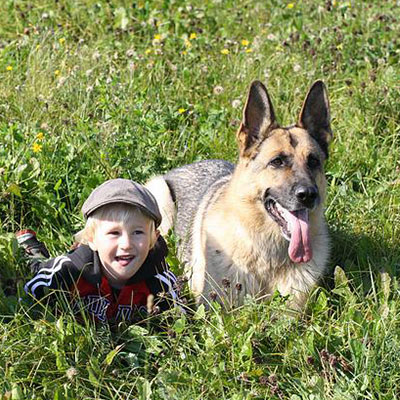
- Every puppy needs to be taught socializing before it turns 12 weeks old as it is very difficult to mold his behavioral traits after that. German Shepherds are protective in nature by birth and thus giving the right direction to this trait is very important. You should teach your puppy to recognize who are your friends and who are strangers and may pose some threat.
- At this early stage, if you expose your puppy to many friends who are of no harm to him, your puppy will pick up cues from your behavior towards them and understand how to behave in front of friends or non-threatening people. This will make your puppy confident and fearless.
- Socializing is not only associated with people but also with new non-living objects like toys, smell, sight, etc. It is compulsory to make him experience several kinds of experience on a daily basis. The more variant kind of objects and experiences he observes and understands, the better socialized he will be. A confident puppy is a happy puppy.
- Another stage of socializing your puppy is introducing him to some of the grooming tools. Grooming is essential to maintain a healthy coat and hence your puppy should not run away by seeing grooming tools.
Read: Are German Shepherds good with kids
Crate Training
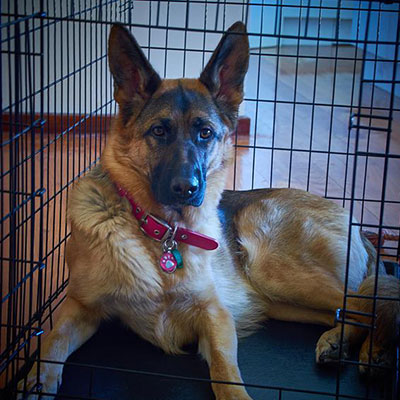
- At times, it becomes difficult for the owner to accompany them 24 hours a day. For this reason, a German Shepherd and all other dog breeds should be crate trained at an early age. If you do not train your dog to stay alone for some time, he might develop separation anxiety.
- Make him practice staying inside a crate by giving him some soft treats. In this way, he will understand that staying inside the crate is a rewarding action. Give him treats when he goes inside and comes out from the crate.
- If the training goes the right way, you will see how your puppy understands when he is rewarded. After some time, feed him treats after making him wait for 2 to 3 seconds.
- Your crate training is successful if you see him staying inside the crate for a few seconds and not coming back to you instantaneously.
- Crate training helps a dog to learn to stay alone if required. For this, owners can keep their puppies inside the crate for some minutes in a day or make a practice of feeding them inside a crate. Your puppy will be accustomed to the atmosphere of the crate.
Read: What size crate for a full-grown German Shepherd puppy
Sleep Training
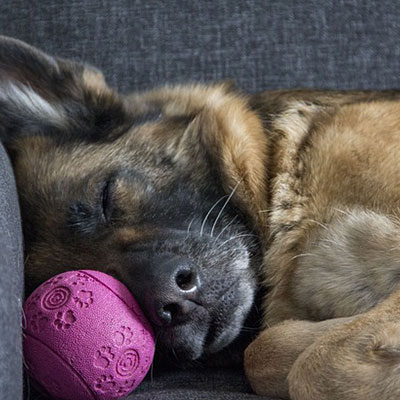
- Sleep training can be critical for German Shepherd puppies. You need to take extra care of your puppy when they sleep at night. Some of the puppies start crying at night which can be very depressing for the owners as well as the puppies. Make sure to not give a chance to your puppy to cry in the first place.
- If possible, let your puppy sleep with you in your bedroom in the initial stages of his life. This would make him comfortable and more connected to you. Once they are accustomed to their new home, you can start moving their beds outside of your bedroom slowly, little by little. Rushing in these situations can be detrimental.
- Additionally, you make a warm and snuggly bed for your puppy which would make him feel protected. There are many products in the market which make warm beds that mimic the warm belly of a mummy dog.
- Make sure your puppy pees before going to bed. Puppies have very small bladders and cannot hold their toilet for a very long time. Hence, it is important to train him to pee before sleeping. Not only this, you have to take him for peeing even during the night when he wakes up. If this is very difficult for you, consider keeping a toilet or pad inside your room where your puppy can pee easily.
Toilet Training
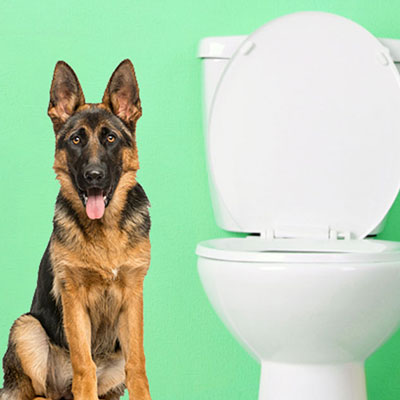
- Toilet training can be started as soon as you bring the German Shepherd puppy home. But be patient, it is very common that your puppy will make places dirty by peeing and excreting inside the house. Everything takes time, and so does toilet training.
- Before you get started with the toilet training, keep some equipment handy like markers, treats, crates, etc.
- When your pup has started with toilet training, reward them with a treat every time they visit the bathroom. This way he will understand that peeing inside the washroom is a rewarding task.
- Decide a toilet area/washroom for your dog before bringing him in the house (at the puppy stage). Make him go to the same area every time he wants to pee. Initially, keep a note of the intervals your puppy pees and accordingly take him to the designated washroom at the designated place.
- Once he understands the particular place he is supposed to pee, treat him every time he successfully pees inside the washroom. In this way, he will inculcate the habit of peeing in a designated area only.
Read: How to potty train a German Shepherd puppy
Teaching German Shepherd puppy to sit
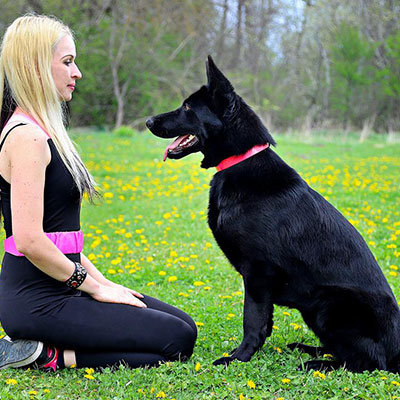
This is one of the most important steps towards teaching a German Shepherd puppy to obey you. When you start teaching him to sit, take a treat in your hand and show him to grab his attention.
The treat will attract him and he will start staring at the treat to get it as soon as possible.
Take an advantage of this situation and hover it above his head and back, to continue looking at it, your puppy will automatically sit down to rotate his head as per the treat’s movement.
Now, when he sits down add a cue word and feed him the treat. Repeat the process until your puppy learns to sit by just hearing the cue word. You will now not have to move the treat in different directions to make him sit.
Training Goals for GSD puppies from 4 months to 9 months
Obedience Training
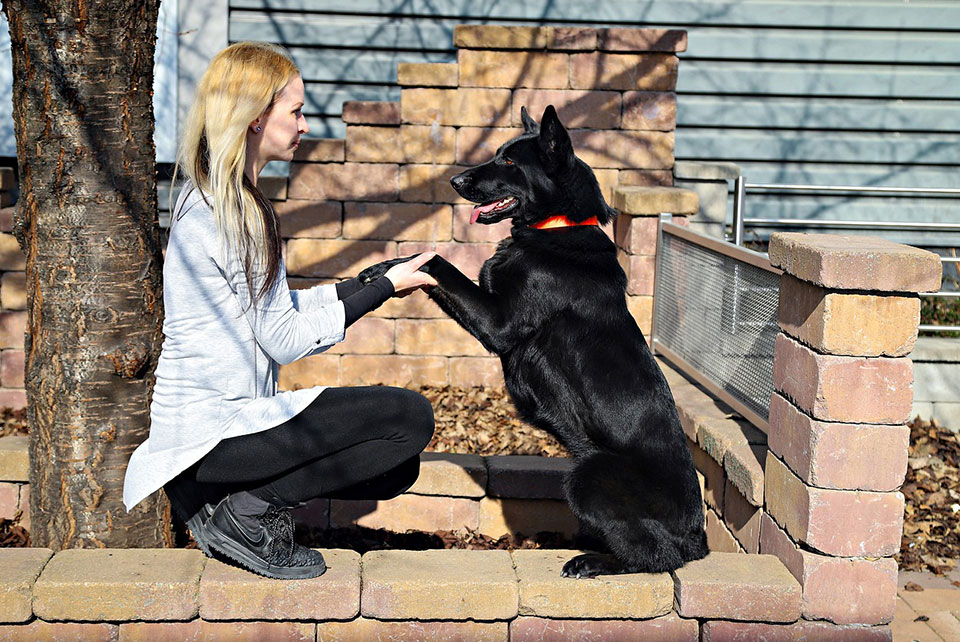
If trained the right way, German Shepherds have excellent obedience traits. They are very loyal to their masters and can do anything to obey their orders. It is necessary that some of the important habits like knowing when to sit, stay, walking with a loose leash, etc. should be taught to your German Shepherd puppy at an early stage.
If you know that you would not be able to teach obedience to your puppy, enrolling him on an obedience training class can be very helpful.
Recall
- Your puppy should know when he is called and should immediately go to the person who is calling him. This trait is very important for all puppies as this can save their lives from any danger.
- You should be able to build such kind of relationship with your dog that when called it can come to you without any hesitation.
- You can also add a cue word that your dog can identify as an order to come. When he comes to you upon calling, feed him treats. This will help him understand that he is doing the correct action.
- If your dog does not respond to your cue word, try the same thing with a whistle. Puppies are mostly attracted to the sound of a whistle.
Impulse Control Training
- All dog breeds should be taught to control their impulse so as to make them well-mannered when they grow up. If not, German Shepherds often become violent and pacifying or controlling them becomes very difficult in such situations.
- German Shepherds are most commonly prone to many types of behavioral problems like digging, excessive barking, unnecessary chasing, biting people, etc.
- If you are able to get control of your dog, teaching all other habits and traits also becomes easier as he would listen to you most of the time.
- There are various reasons why dogs should be taught impulse control at an early age. It would prevent your dog to eat food out of plates, asking permission to eat anything from the owner, not jumping on people who are new to him, not being impulsive in all situations, etc.
Teaching your puppy to ‘stay’
Teaching how to stay is yet another trait that is very important to be taught to a dog. It can help prevent the dog from falling into dangerous situations.
You will be able to prevent your dog from fighting with other dogs on the street or stopping him from running into dangerous places like barbed wire, woods, etc. Refer to the following ways to teach your German Shepherd puppy to stay:
- First, if your puppy has already learnt to sit and lie, command him to be in the same posture by asking him to stay in the same position as long as you say. Adding a cue word like; ‘stay’ can be helpful.
- When he is sitting, say ‘stay’ to your dog so that he is able to listen to you and understands the cue word.
- If he successfully does that, feed him treats at the end. This will assure him that he did something right.
- Repeat the step a few times and see how your dog reacts. Once he does that, start increasing the distance between you and your dog as well the duration of time he has to stay.
- When he has now successfully learned to stay, introduce a release word to him so that he knows how to get up from the position.
Read: When is a dog old enough for a shock collar
Training Activities for Puppies Older Than 9 Months
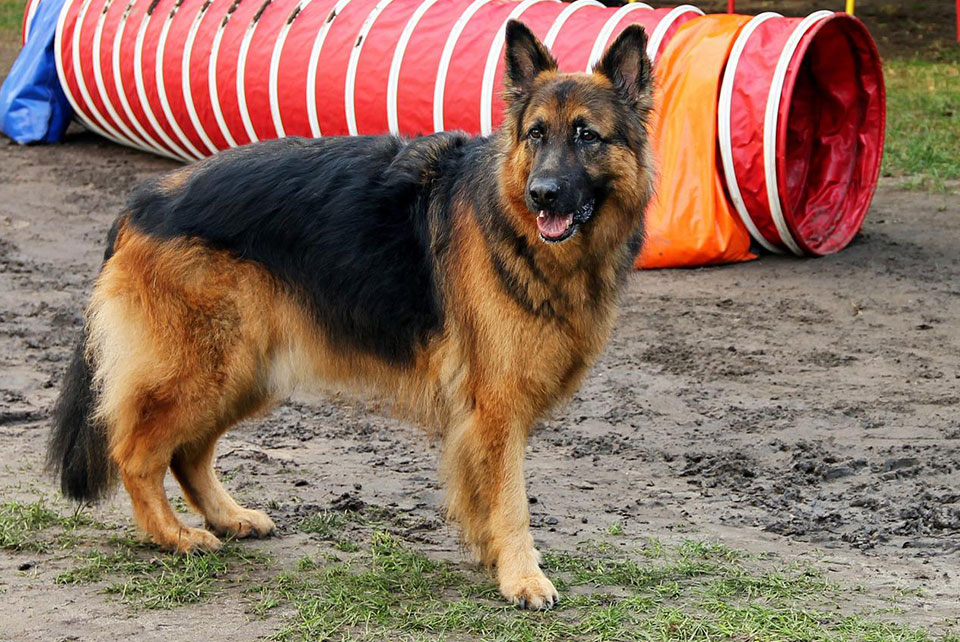
Most dog breeds enter adulthood after the completion of 1 year of age. But in the case of German Shepherds, it is a little late. German Shepherds enter the adulthood stage after 2 or 3 years of age. Males tend to gain maturity after females. Hence, it is very important to keep training your puppy even after becoming 9 months old.
The traits which were taught to them from 2 to 8 months should be continued even now otherwise they might forget how to behave in particular situations. At this stage, German Shepherds require some kind of mental stability as they grow through dynamic changes in this time. For this, you can train your dog to find hidden objects or treats, introduce him to new things, etc.
Read: How to train a German Shepherd to attack on command
8-week timetable for German Shepherd Puppy Training
If you are confused about what, when and how to start, you can have a glance at the table below. This illustrates what kind of exercise and at what patterns over the span of 8 weeks can be practised by your puppy.
Week 1-4
| Socialization activities to be taught in week 1-4 | Other Training activities to learn in week 1-4 | Miscellaneous Tasks |
| Your puppy should be adapted to the surroundings. Make him explore your garden. Make him walk on various types of surfaces. Make him see different people walking past your house. Take him in the car. Introduce him to your friends. Introduce other dogs. | Train him to recognize his name. Recall training. Crate training. Sleep training. Toilet training. Sit training by adding a cue word. Jumping. Alone training. Lead walking | Brushing. Hand touch. Harness fitting. Grooming of sensitive areas. |
Week 5-8
| Socialisation activities to be taught in week 5-8 | Other Training activities to learn in week 5-8 | Miscellaneous Tasks |
| Leave your puppy alone for some time and visit someplace. Take him to walk in joggers’ or cyclists’ lane | Alone training. Lead walking outdoors. Common physical exercises. Make him follow while you walk Stay training. Carry on home exercises. Exercises in different locations. | Trim nails. Check and clean your puppy’s mouth. Make him comfortable with ear drops. |
How To Train a German Shepherd Puppy To Stop Biting?
Training your German Shepherd puppy to not bite can be a challenging task. Even a well-trained and well-mannered dog can start biting people for no reason. There are various ways by which you can train your puppy not to bite anyone unnecessarily.
Make an ‘ouch’ sound if your puppy bites you and move out of the room where he is playing for some time. This will make him understand that he did something which is not well received by you. Do not make a smiling or happy face during this activity even if your puppy’s innocent eyes are too irresistible.
If your German Shepherd is continuously biting you when you go near them, make him stop that by using partition gates. This would not allow him to jump on or bite you. Once he is calm and quiet, pet him and feed him treats to show that being calm is the right thing to do.
One other reason for puppies to continuously bite you or objects is to get relief from the pain when their teeth are coming. Biting doesn’t always occur because of aggressiveness. In such situations, provide your German Shepherd puppy with chewable toys or toys which are especially designed for teething period. You can also stuff a kong with frozen treats or nibbles to grab his attention.
Read: How to train German Shepherd not to pull on leash
One other way to stop the biting habit of your puppy is to distract or redirect him. If he comes to bite you, remove your hand and instead provide him his chew toy. Encourage them to chew the toy rather than your hand. Repeat the process until he completely stops biting people. Ideal toys for this practice are squeaky toys which distract him largely. He would be more focused on the toy now than your hand.
Things to be careful of while training German Shepherd Puppies
German Shepherds if trained well become the best guard dogs and are very obedient to their masters. But, unfortunately in some situations when masters make certain mistakes while training them, puppies can become violent and aggressive. Since German Shepherds are known for their aggressive nature and over-enthusiastic character, training them, at times, becomes difficult. So, if you do not want to make any mistakes while training your German Shepherd puppy, keep reading the blog to know the details.
Starting the training session late
Most of the people delay to train their German Shepherd puppy. Owners think that they can relax for some time as the puppy might feel overwhelmed if trained from the first day of bringing them to your home. But this isn’t true. You should train your puppy from the first day of bringing him. If training is delayed, your puppy can develop anger issues.
Things to be careful of while training
To save themselves from embarrassment, some owners never let their puppies be around people who visit them. This hinders the socialization of the puppies. It is very important that you introduce your puppy to your friends and relatives at an early stage so that he learns how to socialize with people. Unlike other social dogs, German Shepherds are by nature not socializing, so it might become difficult to make them interact with people.
Read: Best mind games for German Shepherds
Becoming forceful and aggressive towards your dog
This is the most common mistake that owners make while training their puppies. You should never be aggressive and irritated towards puppies when training them. You will require a lot of patience, and energy for training your puppy because everything can’t be easy, right! You will have to be extremely calm and understanding towards them otherwise they may eventually become violent and aggressive. Try to use positive reinforcement activities for training.
Being inconsistent with the training session
Like all other dog breeds, you have to be consistent with the training process of your German Shepherd puppy otherwise it can have a confused attitude and would not give you desired results. Do not break a habit of your dog or react differently to the same action of your puppy. It might not understand if it was a rewarding or undesirable activity. This should be followed not only by you but also by your family members and everyone else who comes to visit your puppy.
No revision sessions
If you train your puppy for an action, it might do as you stay at the first instance, but just like human beings, if you do not make him do the same action regularly at intervals, he might forget and not perform as you say. This is a very common mistake made by almost every dog owner. Provide him treats initially every time he does something as instructed.
Excessive or insufficient training
Appropriate training time is important for your puppy. Training him for too long or too less will be no fruitful. It is recommended that you train your German Shepherd puppy for at least 10 mins at regular intervals daily. This will help him follow your instructions easily. Try to teach him only one trick at a time and do not end the training session until he learns the action taught to him. Similarly, training your puppy for too long will bore him and would lose focus.
Read: How to train your German Shepherd to heel
Conclusion
Owners need to be extra careful while training them and have to take care of a lot of things. The process can be tedious but the end results are really desirable. After all, who would not want a well-mannered dog in their house? Never let your dog have control of you and always have a relationship with your dog that he is obedient and follows your instructions. Do not feed your puppy treats very frequently otherwise it may make him a spoiled dog! Know the right time and right action to train him and reward him.